Recent Searches



April 15, 2026
April 15, 2026
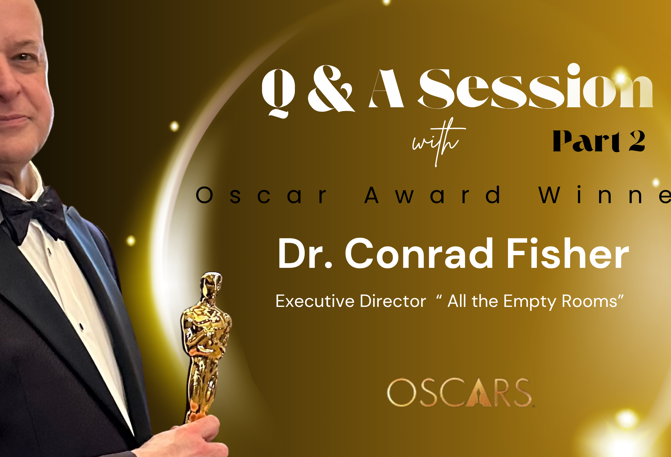
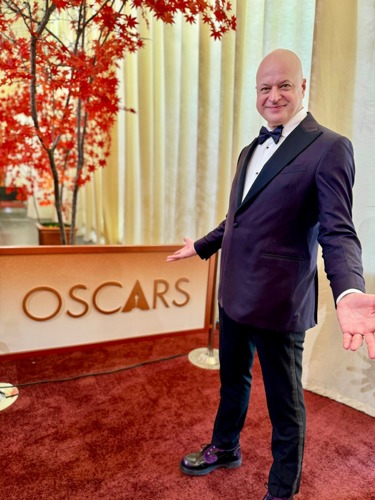
Conrad Fischer, MD, is the Program Director and Vice Chair of the Department of Medicine at OBH Brookdale Hospital Medical Center and a Professor of Medicine. An infectious disease internist based in Brooklyn, Dr. Fischer also serves as Executive Director of the documentary All the Empty Rooms that is now on Netflix. This film recently won an Oscar for Best Documentary Short at the 98th Academy Awards.
What was your initial reaction when you learned you had won an Oscar?
These projects take three years of effort, so it is at first a sense of relief like getting over the finish line in a long, hard contact sport.
It is not a sense of elation at first that comes later and it lasts for weeks. It sounds like a doctor analogy, but it's like having such a high expectations on you when you've been nominated before that it has the feeling of like finding out your biopsy came back negative and you can relax now and breathe.
Then you can't pay attention to anything and can't sit still cause it's so exciting and you hear from everybody
What does this recognition mean to you, both personally and in relation to this project?
How do you hope this achievement will elevate the message of the film and its impact moving forward?
They say when you’re nominated and you don’t win, that just being nominated is a win, and that is only a very tiny, tiny bit true. Mostly, it’s not true, because what you can do with the win and the recognition that that brings makes it so that you can use that fame, that popularity, dare I say privilege, to help people.
I think it also is especially important for the other people who work and the patients at One Brooklyn Health. The patients expressed repeatedly to me over the last few weeks that they now can feel like they’re at a place that can do anything, even if it’s not directly medical, although it is a movie about the most common cause of death in children in this country. Rather, they feel proud to be a patient at One Brooklyn Health, in part because they see it as a group that they feel, in a way, recognizes themselves.
I was most proud of the fact that at my clinic at STAR, on my first day back, they threw a surprise party and dressed the place up like the Oscar ceremony, and every staff member, from the nurse to the clerks to the social worker, yelled, “We won.”
And I really liked that so many people felt a part of elevating our institution by association with just some “dude we see every day.”
The film never says the word gun, never says the word bullet, and says nothing politically, but hopefully the message of the film will leave an impact on the hearts of people, because in the last 25 years, 800,000 people have been killed in gun violence in the United States alone.
All the Empty Rooms follows veteran CBS News correspondent Steve Hartman and photographer Lou Bopp as they embark on a seven-year project documenting the empty bedrooms of children killed in school shootings. Stepping away from his signature human interest stories—and unbeknownst to his network’s leadership—Hartman pursues a deeply personal exploration of absence, memory, and the unseen ripples of America’s gun violence epidemic. As these senseless incidents claim more young lives than any other cause in the United States, these quiet bedrooms reveal truths more powerful than statistics ever could.
More than a film, All the Empty Rooms serves as a call to action. By honoring the children and families featured, the documentary underscores the lasting impact of school shootings and gun violence on communities across America and stands alongside organizations working to remember those lost and support those left behind. Through advocacy, policy, public safety, and community violence intervention, every step matters in working toward #NoMoreEmptyRooms.