Recent Searches



January 29, 2026

January 29, 2026
Dr. Nanette Thomas, Medical Director of One Brooklyn Health Ambulatory Care
Cervical cancer is one of the most preventable cancers — yet too many women are still diagnosed late. Screening matters because it doesn’t just find cancer early; it often finds abnormal cells before they become cancer, when treatment is simpler and highly effective.
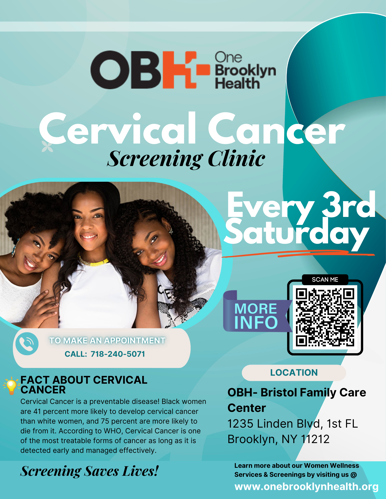
Cervical cancer risk has fallen over the past few decades, largely thanks to Pap testing and the HPV (human papillomavirus) vaccine. But the disease has not disappeared — and it continues to affect Black/African American women at higher rates and with poorer outcomes. Black women are 41% more likely to develop cervical cancer and 75% more likely to die from it. Contributing factors include unequal access to care, fewer routine screenings, delays in follow-up testing, and structural barriers such as transportation, childcare, work schedules, and historical mistrust of the health system.
Current guidelines, as per American Cancer Society, generally recommend screening beginning at age 21, regardless of sexual activity. From 21–29, most women need a Pap test every three years. From 30–65, screening done by a clinician, may be done with HPV testing alone every 5 years, Pap plus HPV every five years, or Pap alone every three years. When results are abnormal, follow-up may include repeat testing, closer monitoring, or a minor procedure to remove precancerous cells. Women over 65 who have had adequate past screening and women who've had a hysterectomy, do not need additional screening.
Prevention remains powerful: HPV vaccination, regular screening, and timely follow-up save lives. Over the last 50 years, cervical cancer incidence and deaths have fallen by more than 50% in the US. When cervical cancer is found early, five-year survival is higher than 90%. Once cancer has spread to other areas of the body, the five-year survival drops to 20%. Recently FDA approved at home self-collection cervical cancer screening kits should also improve screening rates and early cancer detection. Self-collection HPV tests should be repeated every 3 years.
Cervical cancer is 100% preventable, yet global cancer reports say that over 350,000 women die from the disease. Increasing awareness — especially in communities at higher risk — is essential to closing the gap and improving survival. Your health matters to us. At One Brooklyn Health, we’re here to support you every step of the way. Join our Cervical Screening program, held every third Saturday at the OBH Ambulatory Clinic at Bristol Family Care Center, 1235 Linden Blvd. Early detection can save your life, let us help you take this important step. Learn more about our services at www.onebroklynhealth.org.
Also Featured In
Our Time Press- Local Newspaper