Recent Searches



May 20, 2026
May 20, 2026
By: Amanda Barrett, Public Relations Specialist, One Brooklyn Health
“In March 2021, I was just getting ready to leave my house, and I suddenly fell to the floor,” Maryann recalls. She was rushed to a hospital where doctors discovered a ruptured brain aneurysm. Emergency surgery was performed to repair it.
But even after the repair, Maryann was unaware she still had 3 unidentified brain aneurysms that may rupture anytime.
“I wasn’t told to keep getting checked up, or contacted for monitoring after my first surgery, I’ve never heard about brain aneurysms. I’ve only heard about brain tumors.”
A Second Life-Threatening Event: November 2024
On November 18, 2024, at 39 years old, Maryann faced another frightening emergency.
“ I tried to call my boyfriend, but he wasn’t immediately available,” she recalls. When he called back, she told him, “My head hurts. I think it’s bursting.” Concerned, he contacted his landlord to check on her at his house.
“When I tried to get up, I realized I couldn’t stand. That’s when my boyfriend called emergency services,” Maryann explains. She was taken to the One Brooklyn Health- Brookdale Campus, marking OBH’s involvement in her care.
Doctors discovered that the 3 undiscovered aneurysms had ruptured again caused by a dangerous consequence of the lack of regular follow-up care.
“I wouldn’t have had the second brain aneurysm in 2024 if I had the proper care,” Maryann says. “I didn’t think the headaches I had a couple of weeks before were anything serious. I just took a painkiller and relaxed. I wasn’t told I needed a checkup, and brain aneurysms aren’t hereditary in my family, so it wasn’t something I thought about.”
Emergency Intervention
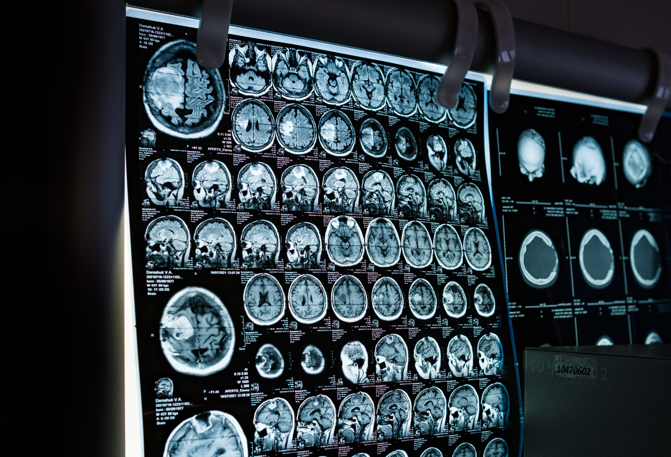
Upon arrival, Maryann was quickly stabilized and underwent a CT scan, which revealed a subarachnoid hemorrhage, or bleeding around the brain. A CT angiogram confirmed a ruptured aneurysm in her right posterior communicating artery. She also presented moderate neurological symptoms (Hunt & Hess grade III) and hydrocephalus, a dangerous buildup of fluid in the brain.
Within 24 hours, Maryann was under the care of Dr. Yahia M. Lodi, Neuroendovascular Surgery specialist and Chief of Neurointerventional Surgery and Stroke Services at OBH, and his team at One Brooklyn Health.
Dr. Lodi explained, “In an event of a rupture aneurysm, approximately 20–30% of patients die before reaching the hospital. For those who arrive, the outcome largely depends on their condition at presentation. We grade patients on a scale of 1 to 5, where 1 is completely normal and 5 is a deep coma. Maryann presented at grade 3. Even with treatment, around 50% of patients may still have a poor outcome.”
“Dr. Lodi and his team were amazing. They acted fast and explained everything to me,” Maryann said.
The team performed emergency endovascular repair, a minimally invasive procedure where tiny coils and stents are used to secure weakened blood vessels. An extra-ventricular drainage was placed to relieve the fluid buildup. The surgery was successful, stabilizing her condition and preventing further immediate risk.
Discovery and Treatment of Additional Aneurysms
During follow-up imaging, Dr. Lodi discovered two more aneurysms near her eyes (in the paraophthalmic artery region). Because it was unclear whether these had ruptured, in the setting of diffuse subarachnoid hemorrhage, which is bleeding in spaces between and round the brain. Dr. Lodi decided that these newly found aneurysms required urgent repair.
The procedure was extremely complex, and the team had to be careful to avoid causing bleeding from previous repaired aneurysm or the new ones.
Cerebral vasospasm, a temporary narrowing of brain arteries after bleeding, imposes additional risk, increasing the chance of stroke.
Dr. Lodi explains, “Naturally, when you have a ruptured aneurysm going for neurointerventional surgery, there’s a roughly 10% chance of complications including stroke. With multiple aneurysms and cerebral vasospasm, the procedure becomes even more challenging.”
Dr. Lodi and his team first treated the vasospasm, a temporary narrowing of the brain’s blood vessels, to reduce the risk of stroke. They then carefully repaired the aneurysms near her eyes by inserting tiny coils and stents—small devices that reinforce the weakened blood vessels and prevent them from rupturing. The precision required was extraordinary, given the high risk of further bleeding and the fragile state of her blood vessels.
After the procedure, follow-up angiograms confirmed that all aneurysms had been successfully secured.
“A couple weeks before, I had mild headaches, and I didn’t think much of them. If I had been told to follow up, I would have been more on it. Dr. Lodi and his team finally gave me the care and guidance I should have had from the start,” Maryann reflects.
Recovery and Support
Maryann spent two weeks in the critical care unit before being discharged from the hospital. She has since made a strong functional recovery but continues to manage some memory challenges. Her supportive friends and family, including her two children, played an essential role in her recovery.
“I am so grateful for Dr. Lodi and his team,” she says. “I can’t complain about the care I received. The OBH team not only gave me medical expertise but also allowed my family to be with me during critical moments. That support made a huge difference.”
A follow-up angiogram four months later confirmed that all four aneurysms had been successfully treated, bringing immense relief and joy to Maryann.
“I was feeling very positive that she would have a good outcome. After every procedure there was no complication and she would wake up with no deficit,” said Dr. Lodi.
“Dr. Lodi is a caring, competent, and life-saving advocate,” Maryann says. “He gave me the follow-up, education, and respect I should have had from the very beginning. I can’t even imagine what would have happened without him.”
For Maryann, the expert care she received made all the difference. Our board-certified neurointerventional surgery and stroke team are here to help families in Brooklyn diagnose, manage, and improve neurological health. If you or a loved one is experiencing neurological symptoms, don’t wait to visit our Brookdale campus for immediate care.
Also Featured in Caribbean Life